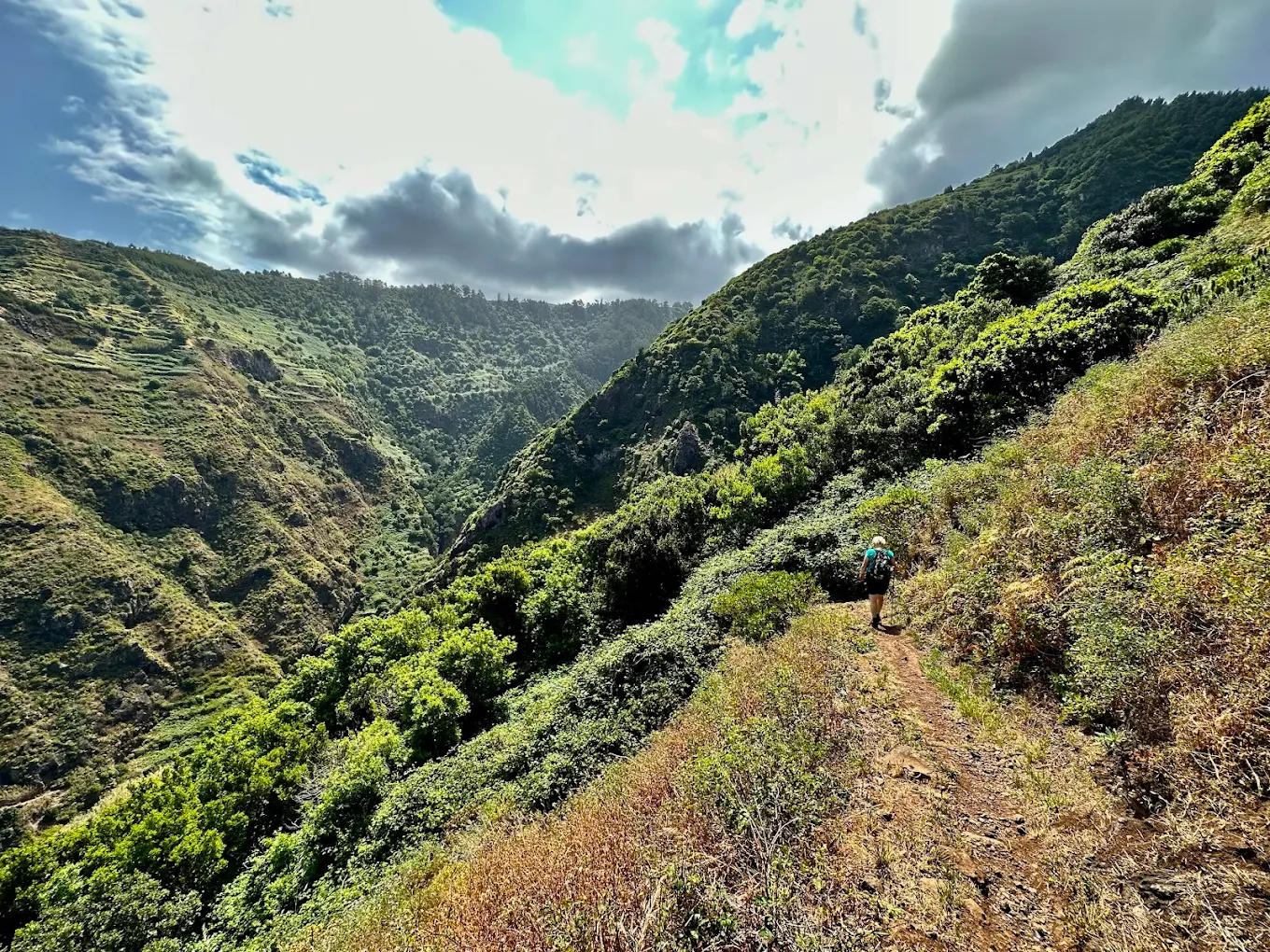
Most of Madeira is green. Aggressively, almost theatrically green, with forested ravines, terraced hillsides, levada channels threading through banana groves and hydrangea hedges. Which is exactly why arriving at the eastern tip of the island for the first time tends to stop people in their tracks.
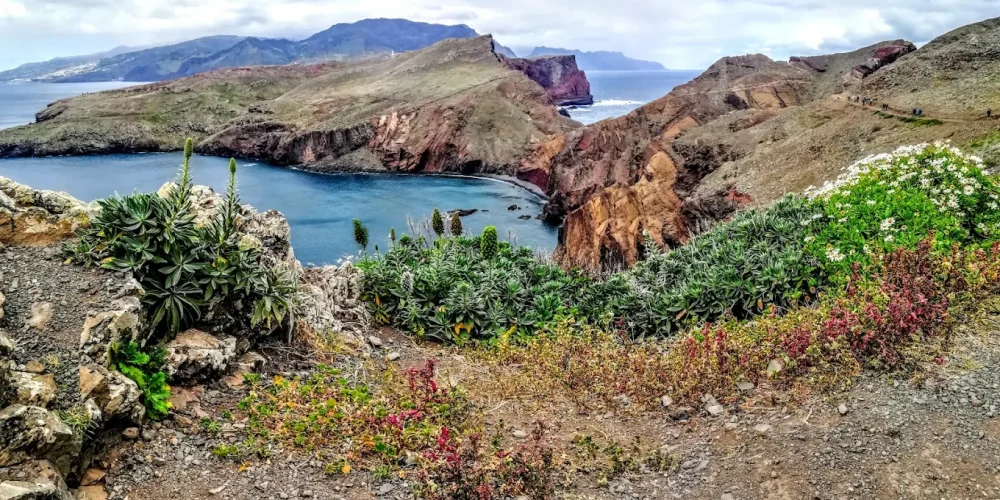
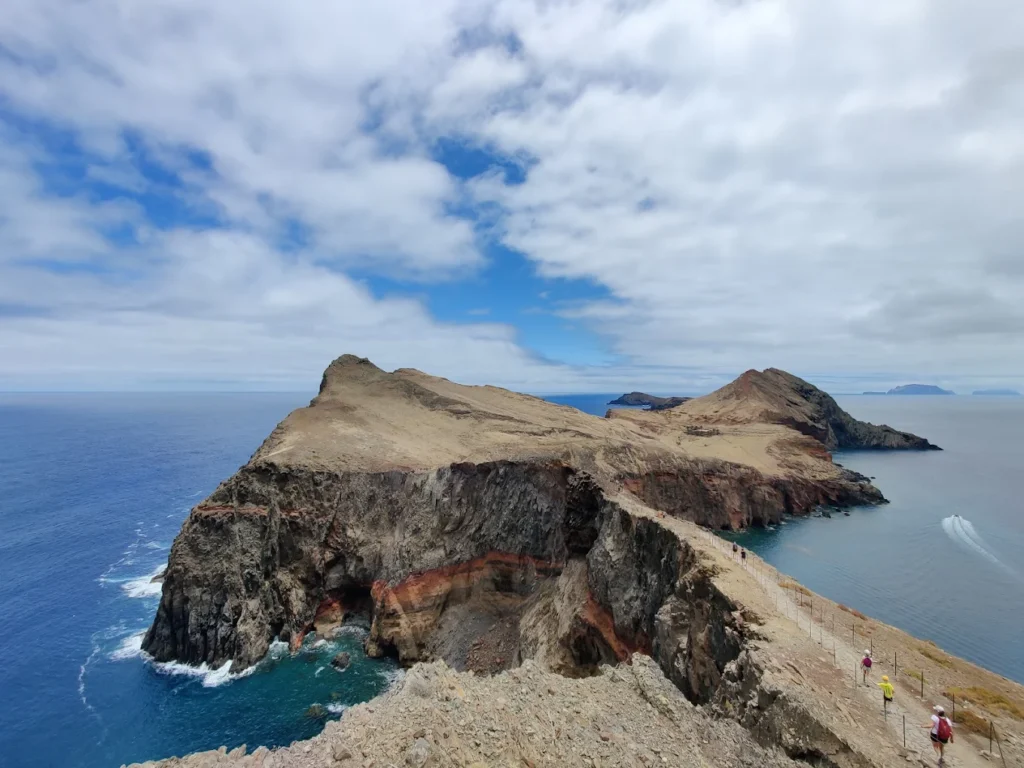
Here, the vegetation thins out, the rock turns rust-red and pale grey, and the terrain narrows into a bare peninsula of volcanic cliffs above the Atlantic. This is Ponta de São Lourenço, and the PR8 Vereda da Ponta de São Lourenço is the trail that takes you along it. There’s no equivalent walk on the island.
Overview of the Ponta de São Lourenço Hike
The PR8 is a linear trail (3 kilometres one way, 6 kilometres return) starting from the car park at Baía de Abra near Caniçal and finishing at Casa do Sardinha at the far end of the peninsula.
Casa do Sardinha, a former fisherman’s shelter now used as a nature information point, is the official end of the PR8. From here, the Sardinha pier gives you access to sheltered water, so a swim at the end of the walk is a reasonable option on a warm day.
The peninsula is mostly basaltic in origin, with some limestone sediment formations, and two small islets, Ilhéu do Desembarcadouro and Ilhéu do Farol, lying just off its tip.
Before you go: access to the reserve costs €4.50 per adult (free for under-12s) and must be paid in advance via the SIMplifica portal. Sort this before you travel.
Driving from Funchal takes around 45 minutes to an hour via the ER101. From Machico, it’s closer to 20 minutes. A hire car is the most practical option, particularly for an early start.
Ponta de São Lourenço Weather and Best Time to Visit
Ponta de São Lourenço weather is significantly drier than the rest of Madeira. The central mountains intercept most Atlantic moisture before it reaches here, leaving a semi-arid landscape of low-lying vegetation and almost no tree cover, shaped by persistent northerly winds. The path is largely unshaded, and some sections run close to cliff edges where wind matters.
Spring and autumn are the most comfortable seasons. Madeira’s weather is mild year-round, but March to May and September to October tend to offer settled conditions without the midday heat of summer. If visiting in July or August, starting before 9am is worthwhile.
For a full breakdown of conditions by month, the best time to visit Madeira guide covers this in detail.
Trail Difficulty and What to Expect on the PR8
The PR8 is rated medium difficulty. The ground is uneven throughout, with sections of loose rock and some steeper stretches as you move further east. The official estimated duration for the full round trip is 2 hours 30 minutes, though walkers who stop frequently or take their time should allow a little longer. Maximum altitude is 126 metres, lowest point 23 metres.
Those with a strong discomfort around heights may find sections of the trail challenging, as the drops to the sea on either side are real and close. Sturdy footwear is essential; trail shoes or walking boots are appropriate, sandals are not.
Essential Tips for the Ponta de São Lourenço Hike
- Book your entry in advance: The €4.50 fee must be paid via the SIMplifica portal before you arrive.
- Arrive early: The car park at Baía de Abra is small and fills quickly on weekends and in summer.
- Carry enough water: There are no shops or water points on the trail. A minimum of 1.5 litres per person is sensible, more in warm weather.
- Bring sun protection: The lack of tree cover means prolonged direct exposure, even on mild days.
- Follow the waymarkers: The trail uses the yellow and red signs of Madeira’s official walking network. Stay on the marked path, particularly near the cliff edges.
What to See on the Ponta de São Lourenço Peninsula
The appeal of the PR8 is the gradual transformation of the landscape as you move east. Vegetation gives way to bare rock. The colours shift through layers of red, black, and ochre, the visible record of different volcanic events over millions of years.
The peninsula is a Partial Nature Reserve. It supports one of the largest seagull colonies in the region, along with protected species including the Cory’s shearwater and the black-winged stilt. Out at sea, monk seals (among the rarest marine mammals in the world) are occasionally spotted, though sightings are far from certain.
From the higher sections of the trail, the Desertas Islands are visible to the southeast and, on clear days, Porto Santo appears to the north.
If this type of walking appeals, the hikes in Madeira guide covers the island’s full trail network, including Pico Ruivo for those looking for a more demanding day.
Plan Your Visit to Ponta de São Lourenço Madeira
The PR8 Vereda da Ponta de São Lourenço delivers something genuinely different from the rest of Madeira’s walking options. The landscape is raw and exposed, and finishing at the Sardinha pier with the option of a swim gives the walk a satisfying conclusion. Come prepared and it consistently earns its reputation.
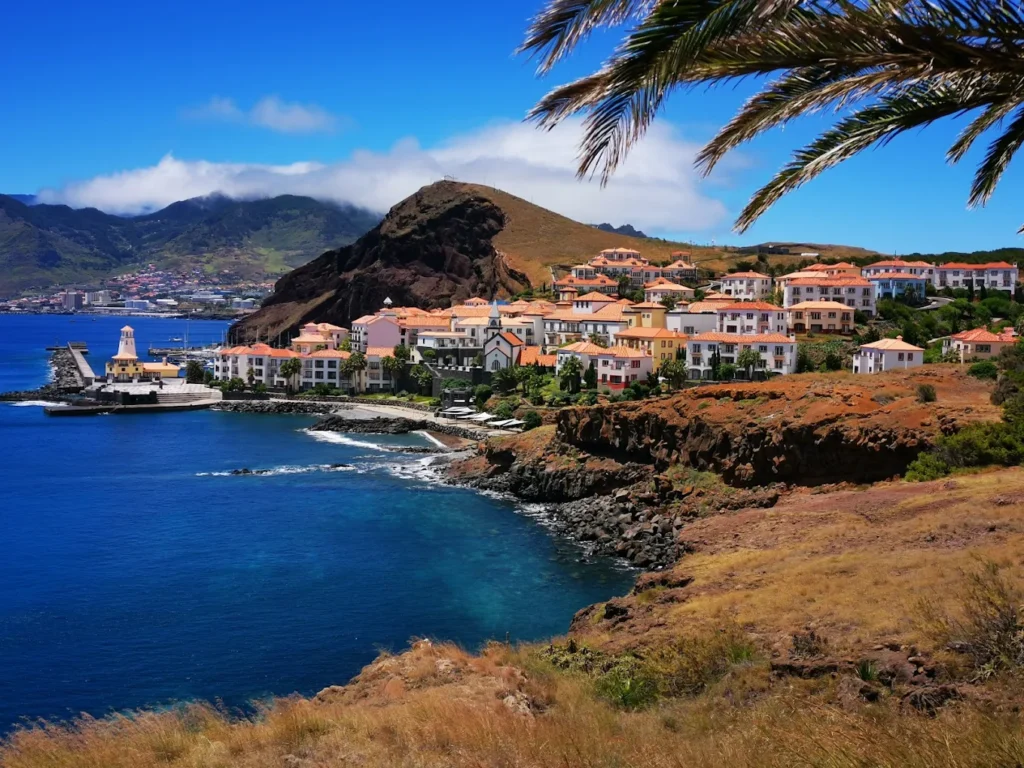
Within a broader trip, it works well as a half-day excursion from Funchal or a relaxed morning from the eastern end of the island. Caniçal is worth a brief stop, and Machico (a short drive back along the coast) has a sandy beach and good options for lunch. For anyone planning things to do in Madeira over a week or more, the east of the island can easily fill a full day.If you’re looking for somewhere to stay, Atlantic Holiday offers holiday rentals across Madeira, including properties well-placed for the eastern end of the island. A self-catering rental lets you reach the trailhead early and structure the day on your own terms. Browse the full range at Atlantic Holiday Rentals.