Pico do Arieiro sits at 1,818 metres and is the third-highest peak on Madeira. It’s also one of the easiest high points on the island to reach by road, which explains why it attracts walkers, photographers, tour groups, and sunrise chasers most mornings. From the parking area, it takes only a couple of minutes on foot to reach the main viewpoint, where the land drops away sharply into the island’s central massif and, on clear days, the Atlantic stretches out behind it.
This guide breaks down what you actually see up there, how access works, and what to know if you’re planning to walk part of the Pico de Ariero hike across the island’s highest ridges.
Where is Pico do Arieiro and how do you get there?
The summit is reached via the ER103 road, which climbs steadily from Funchal through forested slopes before breaking out above the tree line. Driving time from Funchal, Machico, or Porto da Cruz is usually around 40 minutes.
There is no public transport to the top. Most visitors either drive a rental car or arrive by taxi. Ride-hailing apps operate on the island, but availability at altitude is less predictable early in the morning.
Parking (currently €4 per hour) is on site and well maintained, with toilets, a café, and small shops nearby.
If you’re staying in or around Funchal, it can be useful to plan your visit alongside other viewpoints such as Pico dos Barcelos or Miradouro da Portela on separate days.
Altitude, views, and what you actually see at the summit
At 1,818 metres, conditions at Pico do Arieiro are often very different from the coast. Temperatures are lower, wind is common, and cloud can roll in fast. Even on warm days in Funchal, a jacket is sensible here.
Pico do Arieiro, often searched as Pico Ariero Madeira, forms part of the island’s central mountain range, known locally as the Madeira Mountain Massif. From the summit area you can look across jagged ridgelines towards Pico das Torres and Pico Ruivo, with deep valleys like Curral das Freiras cutting sharply below.
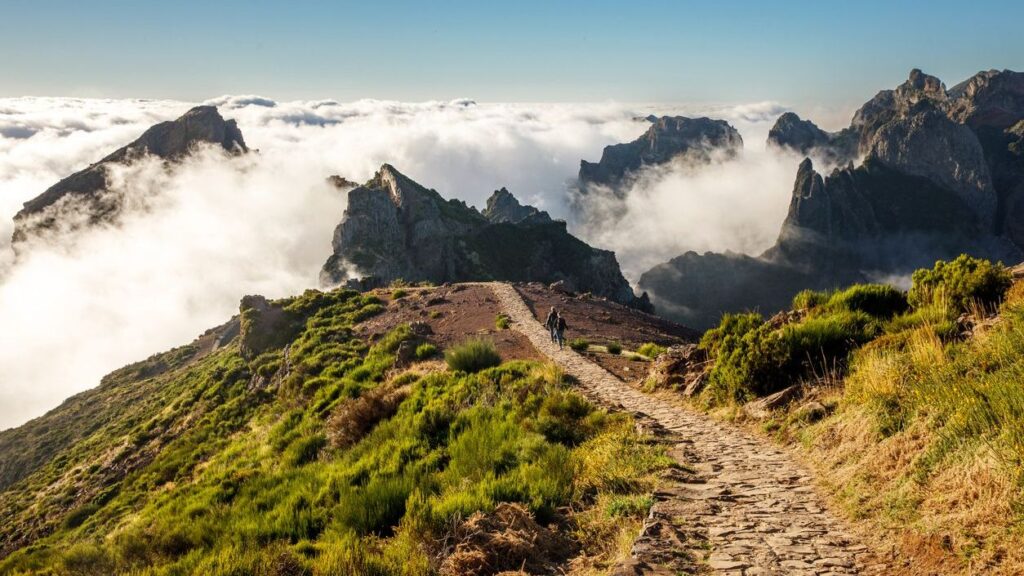
On clear days, visibility can extend as far as Ponta de São Lourenço on the eastern tip of the island, and sometimes even to Porto Santo. When cloud sits lower, the peak often rises above it, creating the well-known “sea of clouds” effect that draws people up before dawn.
There is also an alternative viewpoint, Miradouro do Juncal, reached by a short walk from the observatory. It sits slightly lower and is usually quieter, which can be useful if the main area feels crowded.
The Pico do Arieiro to Pico Ruivo hiking trail (PR1): current access and what’s open
What the PR1 route normally covers
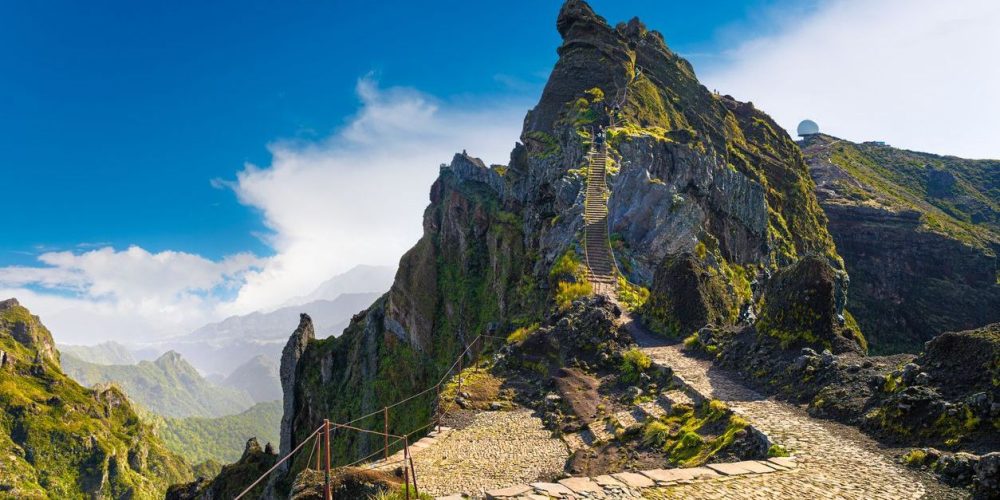
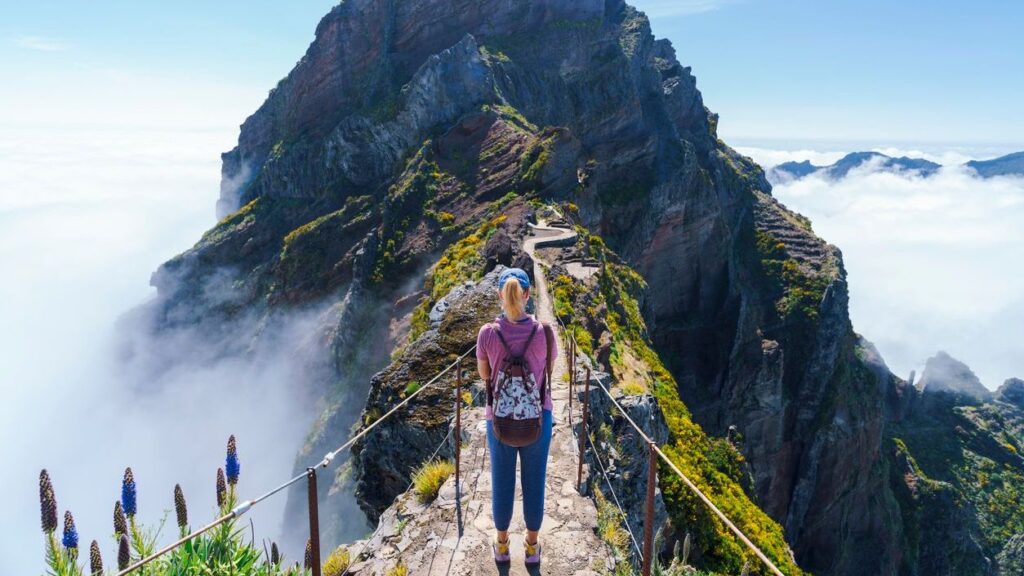
The PR1 Vereda do Areeiro is Madeira’s most well-known mountain route, originally designed to link Pico do Arieiro with Pico Ruivo along the island’s highest ridgelines. Under normal conditions, it runs through tunnels carved into volcanic rock, includes exposed stair sections, and skirts peaks such as Pico das Torres.
Current access conditions on the PR1 trail
At present (February 2026), the trail is partially open. Walking is permitted from Pico do Arieiro as far as Miradouro da Pedra Rija, located around 1.2 kilometres from the trailhead. This section is completed as an out-and-back walk, returning the same way to the summit area.
Beyond Pedra Rija, the PR1 remains closed at the time of writing while IFCN, Madeira’s forestry and nature conservation authority, carries out restoration work following wildfire damage in 2024. The eastern alignment via Pico das Torres is not accessible, and the full crossing to Pico Ruivo cannot currently be completed.
According to current information, the full route is expected to reopen in April 2026, although access conditions and timelines remain subject to change.
What to expect if you walk the open section
Even in its limited form, the open section gives a clear sense of the terrain that defines the PR1. Walkers encounter narrow paths, steep drops, and long views across the central mountain massif. The elevation and exposure mean this is still a mountain walk rather than a casual stroll, particularly when wind or cloud is present.
Those planning to walk this section should treat it as a short, high-altitude route rather than a substitute for the full traverse. Sturdy footwear, warm layers, and an eye on changing weather conditions remain important.
For more walking ideas across the island, Atlantic Holiday’s guide to hikes in Madeira fits well alongside this route.
Tips, timing, and practical planning for the Pico do Arieiro hike
The best months for tackling the Pico de Ariero hike are generally spring and autumn, when temperatures are cooler and crowds are thinner. Summer brings more people, while winter can mean wind, rain, or ice at altitude.
Start early. Sunrise visits are popular, but they also help with parking and reduce congestion on narrow trail sections. There is very little shade, so midday heat can be punishing even when it feels mild lower down.
Good footwear matters. The terrain alternates between stone steps, rough paths, and damp rock. Layers are essential, along with water and snacks.
Trail permit fees are currently €4.50 per person per PR trail via the SIMplifica system, although prices and access rules can change.
The full PR1 route, when open, is not suitable for those with vertigo, and it’s a demanding option for children due to steep stairs and exposed drops. If you only want the views, the summit area itself is easily accessible from the car park.
Plan your visit to Pico do Arieiro with Atlantic Holiday
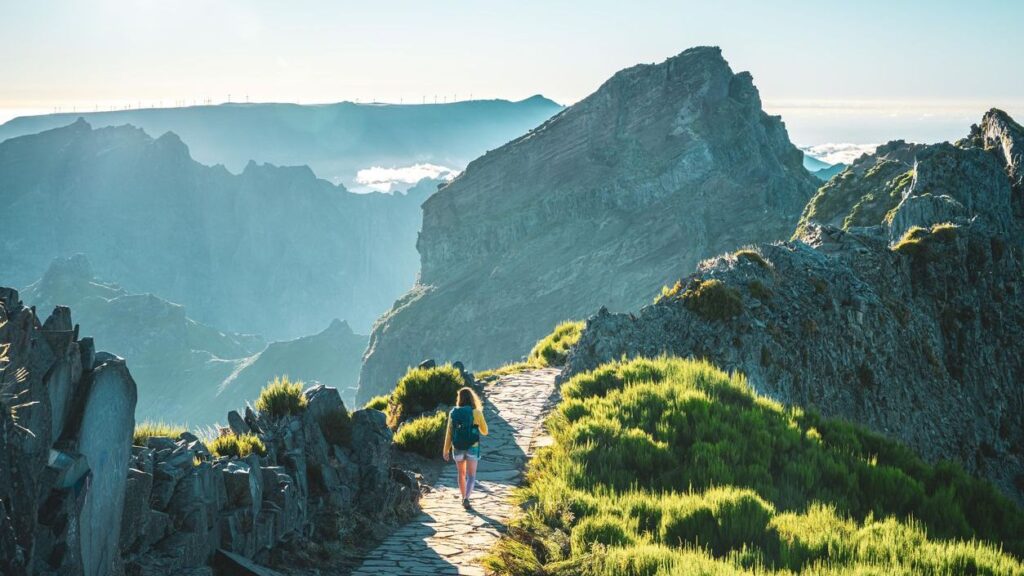
Seeing Pico do Arieiro at first light or standing above the clouds along the PR1 is one of Madeira’s standout experiences, but it works best when the rest of your trip is well paced. Staying in the right location makes early starts and flexible planning much easier.
Atlantic Holiday offers apartments, villas, and holiday homes across the island, including Funchal, Caniço, and quieter coastal areas. Whether you’re combining mountain hikes with beach days or planning a walking-focused break, having a comfortable base makes all the difference.
You can browse available accommodation and book directly through Atlantic Holiday to build your Madeira stay around experiences like this one.